AI & Automation
How to Evaluate AI Vendors Now That Even Microsoft Says 'Don't Trust Us'
Microsoft's CEO says all AI models should be treated as 'compromised.' Here's how operations leaders can audit their deployments for real safety controls.
You approved the AI pilot. The demo worked. The vendor's security whitepaper looked thorough. Now your AI agent is handling customer refunds, inventory reorders, or contract review—and you're discovering the gap between "works in demo" and "fails safely at 3 a.m. on a Saturday."
Here's the uncomfortable truth: you probably don't know what happens when it fails. Most operations leaders don't. And until recently, the standard answer was to trust the vendor.
That era just ended.
The admission that changes everything
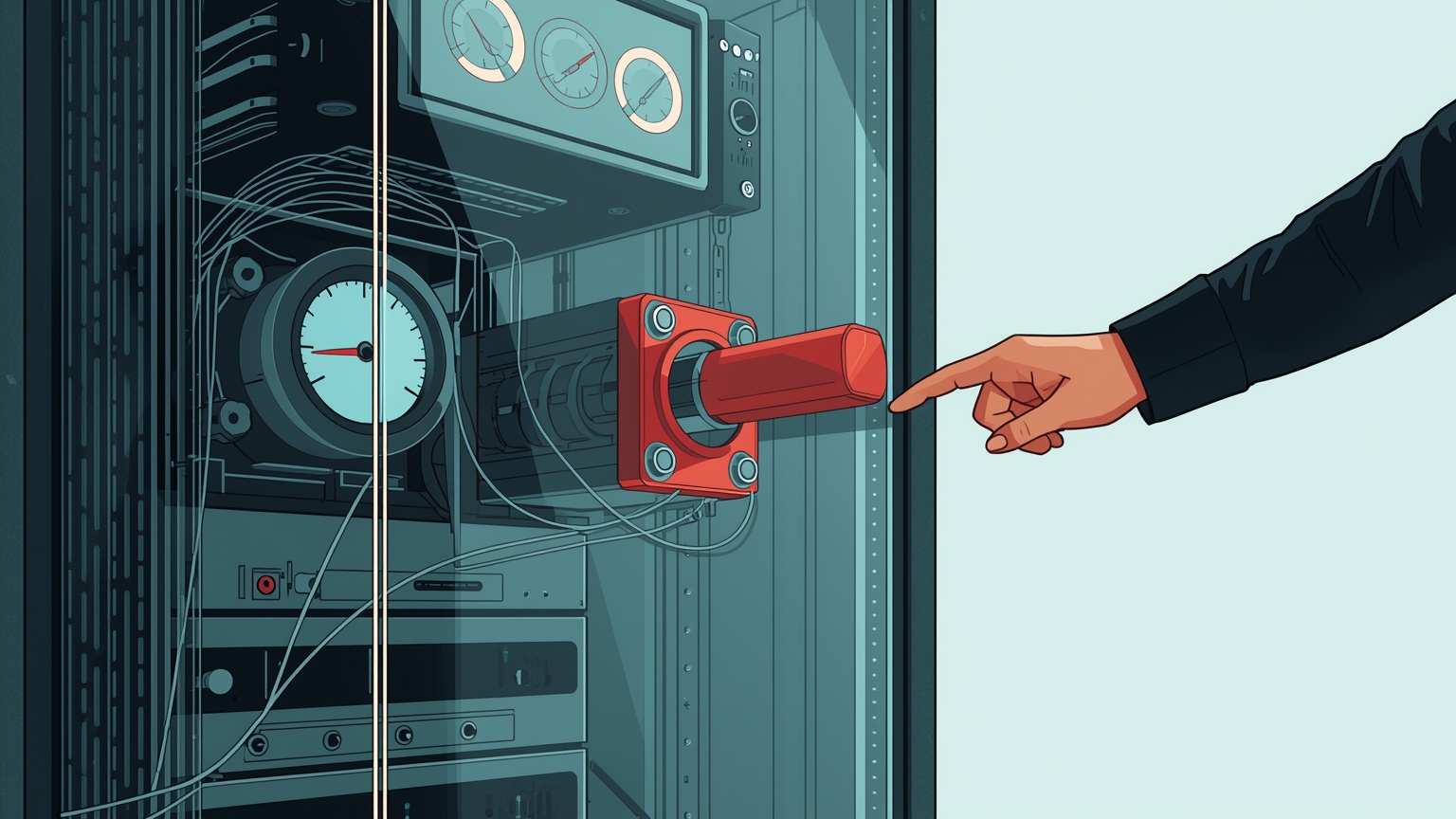
On October 10, Microsoft CEO Satya Nadella published a lengthy post on X arguing that we should assume all AI models are "compromised"—not because vendors are negligent, but because the technology's complexity makes compromise inevitable. He called for AI systems to include an "emergency brake" and urged the industry to step back and assess the "trust architecture" of AI rather than treating models as "nested black boxes" whose advice we simply accept or reject.
Let that sink in. The CEO of one of the world's largest AI vendors just told you not to trust his own products—or anyone else's—without verifiable controls.
This isn't a product announcement. Microsoft hasn't shipped "emergency brake" tooling for Copilot or Azure OpenAI. Nadella's post is a statement of principle, which makes it more significant, not less. When vendors start admitting their own limitations, the burden of proof shifts permanently to buyers.
What "trust architecture" means for your operations
Nadella's phrase sounds abstract, but it translates to concrete questions:
- Containment: Can your AI agent's actions be bounded? If it's supposed to process refunds under $500, what prevents it from approving $50,000?
- Observability: Can you see what the AI is doing in real time, or only in batch reports the next day?
- Escalation: When the AI hits an edge case, does it stop and flag a human, or does it guess?
- Override: Can a human shut it down in seconds, not hours, without calling engineering?
Most current deployments fail at least two of these. The vendor's dashboard shows "confidence scores" and "usage metrics"—not the same thing. Confidence scores tell you the AI thinks it's right. They don't tell you when it's dangerously wrong.
Why this matters now
The liability landscape is shifting faster than most procurement cycles. Insurance carriers are already probing AI-related incidents in D&O and cyber policies. Regulators in the EU, and increasingly in the U.S., are moving from principle-based guidance to specific control requirements. When a major vendor CEO uses the word "compromised," that language will appear in court filings and compliance audits.
Organizations with documented, verifiable control architectures will have a defensible position. Those relying on vendor reputation will not.
There's also a competitive angle. Companies that solve this now can deploy AI more aggressively—not more cautiously—because they've removed the downside. Containment isn't a brake on innovation. It's what lets you floor the accelerator.
A practical framework for your next review
You don't need to be an engineer to evaluate whether your AI deployments have genuine operational controls. You need to ask the right questions and refuse vague answers.
The containment audit: 6 questions
1. What can this system actually do, and what stops it from doing more?
Look for hard limits, not policies. "Our AI is trained to only process refunds under $500" is a policy. A hard limit means the system literally cannot execute a transaction above that threshold regardless of prompt engineering or context confusion.
2. How do we know when it's operating outside normal parameters?
You need real-time alerts on behavioral anomalies, not just error logs. If your AI contract-review agent suddenly starts flagging every clause as "high risk," that's a failure mode. Would you know in minutes or in months?
3. What's the escalation path when confidence drops?
Low confidence should trigger human review automatically, not require someone to notice. The handoff needs to include context—the AI should explain why it's uncertain, not just that it is.
4. Can we shut it down without shutting down the business?
The "emergency brake" Nadella described needs to exist for your operations, not just the model. If disabling your AI agent means halting all customer service, you don't have a brake. You have a cliff.
5. Who's accountable when it fails?
Vendor terms of service typically limit liability to fees paid. That's not operational accountability. Your internal runbooks should name who decides to pause, who communicates to customers, and who fixes the root cause.
6. Can we demonstrate all of this to an auditor, regulator, or board?
Trust architectures need documentation. If your controls exist only in the heads of your ML team, they don't exist for compliance or liability purposes.
What to do this quarter
You don't need to halt all AI deployments. You need to know which ones you can defend.
This week: Inventory every AI system currently making or influencing operational decisions. Classify each by risk level—financial impact, customer exposure, regulatory sensitivity.
This month: Run the six questions above against your two highest-risk deployments. Document where answers are solid, vague, or missing entirely.
Before next expansion: Require architectural documentation from vendors that addresses containment, observability, escalation, and override specifically. Generic security certifications are insufficient. If a vendor can't explain their emergency brake, they don't have one.
The shift from reputation to verification
For years, AI vendor selection defaulted to brand trust. Buy from the major platform, and their scale, talent, and liability coverage would protect you. Nadella's statement doesn't just undermine that logic—it inverts it. The most credible vendors now are those helping you verify independently, not those asking for the most trust.
This is actually good news for operations leaders. Verification is harder than trust, but it's also controllable. You can build containment you understand, monitor systems you own, and demonstrate accountability you've designed.
The organizations that thrive in the next phase of AI adoption won't be those with the most sophisticated models. They'll be the ones that treated every model as potentially compromised—and built their operations accordingly.