AI & Automation
How to Protect Your Budget When Cloud Providers Build Their Own AI Chips
Microsoft's new Maia 300 chip could lower Azure AI costs—but also make it harder to leave. Here's how operations leaders can evaluate the trade-offs.
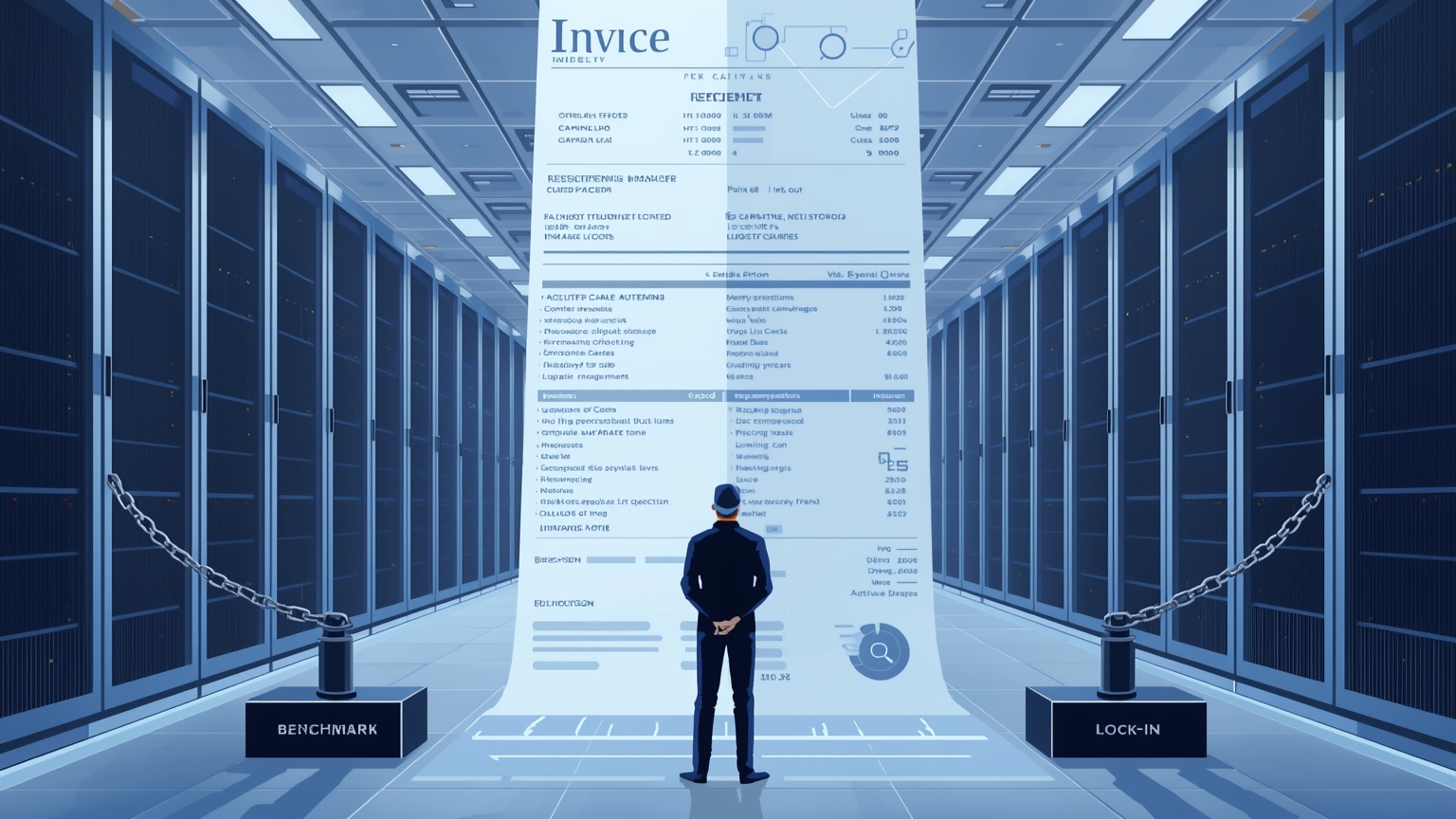
Your AI inference bill keeps climbing, and nobody in finance wants to hear that it's "just the cost of doing business." Meanwhile, the cloud provider sending you that bill is quietly designing its own chips, building its own models, and owning more of the stack every quarter.
Microsoft's announcement of the Maia 300—its third-generation in-house AI chip—is the latest and clearest signal of this trend. The Verge reports that Maia 300 is designed to be the "primary AI inference system" for Microsoft's products and services, with improved cost and efficiency for running AI workloads and better handling of reasoning models and agentic tasks.
For you, this isn't hardware news. It's a procurement signal with real consequences.
The Real Problem: Your Leverage Is Shrinking
When Microsoft buys Nvidia GPUs, you can at least compare Azure's pricing against AWS or Google running the same silicon. The underlying cost structure is somewhat visible. You can benchmark. You can threaten to move.
But when Microsoft owns the chip, the model optimization, the API layer, and the billing envelope, that transparency disappears. Microsoft hasn't disclosed specific cost savings or customer pricing changes from Maia 300. The savings may flow to Microsoft's margins first. Your invoice might drop, or it might simply grow more slowly while becoming harder to decode.
This is vertical integration as vendor lock-in, dressed up as efficiency.
What Actually Changes for Your Workloads
The optimistic case: custom silicon lets hyperscalers cut out Nvidia's markup, and some of that savings eventually reaches you. Inference gets cheaper. Your CFO stops asking weekly questions about the Azure OpenAI line item.
The cautious case: your workloads get optimized for Maia architecture in ways that don't port cleanly to AWS Trainium or Google TPUs. Your engineering team builds around Azure-specific behaviors. Three years from now, migrating means rebuilding, not just redirecting API calls.
Microsoft hasn't specified whether Maia 300 will be available as dedicated infrastructure or only through abstracted API services. If it's API-only, you won't even know when your workloads hit Maia versus merchant silicon. That's not necessarily bad—abstraction is the point of cloud—but it means you can't independently verify performance claims or cost allocations.
The Competitive Window You Can Use
Here's the underappreciated opportunity: AWS and Google are watching this closely. Microsoft's move pressures them to accelerate their own custom chip roadmaps and, more immediately, to compete on price and terms while their silicon catches up.
That creates a negotiation window. Not forever—maybe twelve to eighteen months before the competitive landscape stabilizes into its own new form of lock-in.
Use it now, while providers still need your commitment more than they need your captivity.
A Practical Evaluation Framework
Your finance team already asks whether AI spend is sustainable. They need better answers than "trust the roadmap." Here's how to build them:
Separate model performance from infrastructure cost. A cheaper endpoint that hallucinates more or slows your product team isn't cheaper. Run identical prompt suites across providers and measure latency, accuracy, and throughput independently. Don't let bundled pricing obscure which layer costs what.
Model three scenarios honestly. Single-provider vertical integration might offer the lowest sticker price but the highest exit cost. Multi-provider adds operational complexity but preserves leverage. Hybrid or on-premise demands capital and talent most organizations underestimate. No option is free.
Demand portability guarantees in writing. Your current provider should estimate egress costs, API compatibility commitments, and transition timelines if you leave. If they won't put numbers to paper, that's information too.
Benchmark before you believe. No independent technical verification or pricing data exists for Maia 300 yet. Treat Microsoft's efficiency claims as directional, not contractual. Your workloads, your prompts, your traffic patterns matter more than headline benchmarks.
What to Do This Quarter
- Audit by layer. Break your AI spend into compute, model API, storage, and egress. Most organizations discover surprising concentration in one or two categories.
- Run a shadow test. Pick a non-critical workload and replicate it on a second provider using identical inputs. Document differences in cost, latency, and output quality.
- Schedule procurement review with finance. Model 3-year TCO under single-provider, multi-provider, and hybrid assumptions. Include exit costs in every scenario.
- Request specific commitments. Ask your provider for portability guarantees, pricing lock periods, and transparency into which hardware runs your workloads.
The Bottom Line
Microsoft building its own AI chips isn't inherently good or bad for your business. It is, however, a structural shift that rewards early evaluation and punishes passive consumption.
The organizations that come out ahead won't be the ones with the most sophisticated chip analysis. They'll be the ones that treated this moment as a procurement and architecture decision, not just a product announcement to monitor.
Your cloud provider is vertically integrating. The question is whether your contracts and operational flexibility keep pace.