Web Development
How to Keep Your Customers When Google Controls the Cart
Google's new AI Universal Cart lets shoppers checkout without visiting your site. Here's how e-commerce leaders can defend customer relationships before holiday…
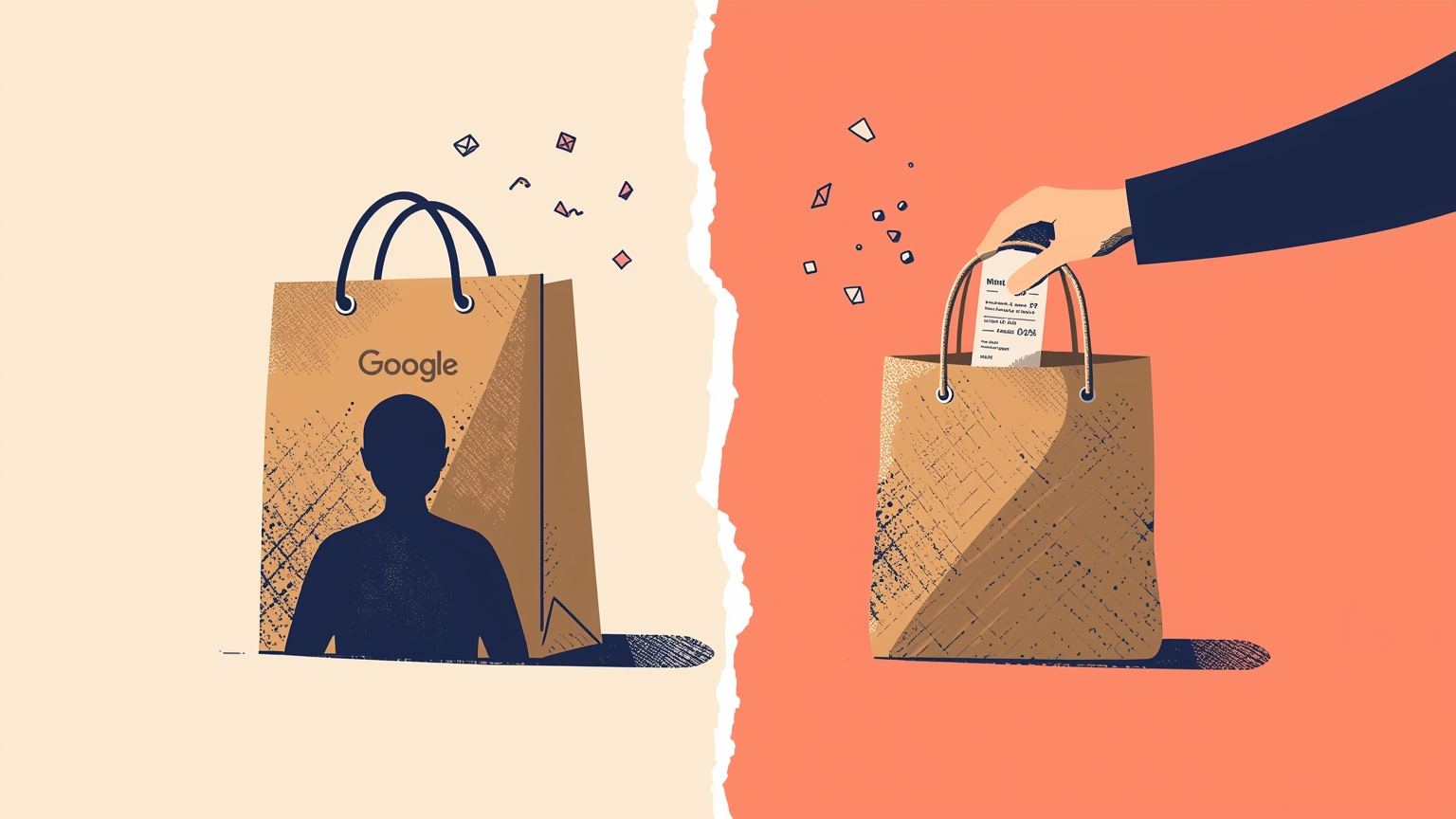
Your customer finds your product through Google Search, compares prices, adds to cart—and checks out without ever visiting your website. Google handles payment, shipping, and returns. You get an order. You lose the relationship.
This isn't hypothetical. Google's Universal Cart, previewed at I/O in May, began rolling out across the US this week in both the Gemini app and Google Search. The tool lets users shop across multiple retailers through a single AI-managed cart. For shoppers, it's frictionless. For e-commerce brands, it's a direct threat to the customer data that drives repeat purchases and lifetime value.
Amazon is pushing in the same direction with new Bee AI devices that integrate directly with Amazon shopping, including a $74.99 wearable that summarizes conversations and builds to-do lists. Two tech giants are racing to own the space between your product and your customer.
The question for e-commerce leaders isn't whether this matters. It's whether you can adapt your technical architecture before Black Friday—or spend 2027 watching margins compress while someone else owns your customer relationships.
What Actually Changed
Google's Universal Cart represents a structural shift, not a feature addition.
Previously, Google sent you traffic. You controlled discovery on your site, built your cart experience, captured emails at checkout, and nurtured repeat buyers. The platform was an on-ramp. You owned the destination.
Now Google can own the entire journey: discovery, comparison, cart assembly, transaction, and post-purchase communication. Your product appears alongside competitors with AI-generated price comparisons. Checkout happens in Google's interface. The customer data stays with Google.
This creates four immediate risks:
- Margin compression. Transparent AI pricing makes undercutting instant and visible.
- Relationship loss. You no longer capture the email, browsing behavior, or post-purchase feedback loop.
- Commoditization. When products sit in a universal cart, brand differentiation collapses to price and review score.
- Platform dependency. The channel you used for acquisition becomes a competing storefront.
The Architecture Decision You Face
E-commerce leaders at mid-market brands—typically $5M to $100M in annual online revenue, heavy Google Search and Shopping spend, limited in-house engineering—now face a binary choice with significant technical implications.
Option A: Optimize for Google's channel. Structure your product data feeds, pricing, and inventory to win in Universal Cart while accepting reduced customer ownership. This requires feed architecture that speaks Google's AI language—structured data, real-time inventory, competitive pricing logic.
Option B: Build parallel direct channels. Invest in headless commerce architecture that serves Google's API requirements for visibility while preserving a differentiated direct-to-consumer experience for relationship-building.
Most brands will need some hybrid. The question is ratio and sequencing.
What "Winning" in Universal Cart Actually Requires
Google's AI doesn't browse your site. It reads your feed. This makes product data architecture—historically a back-office concern—into a front-line competitive capability.
Specific technical requirements remain unclear. The Verge's coverage describes the consumer experience but does not detail retailer onboarding requirements, API specifications, or revenue-share terms. The body text also does not confirm whether all retailers are automatically included or must opt in. This uncertainty itself is a constraint: you must prepare for multiple scenarios without complete information.
What you can do now:
- Audit your current Google Shopping feed for completeness, accuracy, and update frequency
- Identify every point where you currently capture customer data—email, phone, browsing behavior, purchase history—and map which disappear if checkout moves off-site
- Evaluate whether your commerce platform can support headless architecture (separate front-end presentation from back-end transaction processing)
- Model the unit economics: what customer acquisition cost is sustainable when lifetime value drops because you lose repeat purchase data?
The Holiday 2026 Timeline Reality
This launch timing is not accidental. Google is positioning Universal Cart for peak shopping season. That gives e-commerce leaders roughly six to eight weeks for meaningful technical adjustments before Black Friday—a compressed window that favors decisive action over perfect planning.
The first test will be immediate: does AI-intermediated shopping drive conversion through convenience, or does it drive commoditization through comparison? Either outcome shapes your 2027 strategy. But you cannot wait for that data to begin architectural work.
A Practical Checklist for Q4
This week:
- Map your current customer data capture points and identify what survives off-site checkout
- Review your Google Shopping feed health score and fix critical errors
Before November:
- Request vendor assessments for headless commerce migration or API-layer additions
- Model scenario: 30% of holiday volume through Universal Cart with zero repeat customer data
Before January 2027:
- Implement technical architecture that serves both Google's requirements and your direct channel
- Establish first-party data capture mechanisms independent of transaction platform (loyalty programs, content registration, post-purchase engagement)
What This Means for Your Team
If you lack in-house engineering capacity to evaluate these architectural shifts, you're not alone. Most mid-market e-commerce brands run lean technical teams focused on operations, not platform strategy. The constraint is not vision—it's execution bandwidth and the ability to assess vendor claims against your specific situation.
This is where external technical partnership becomes relevant. Not for implementation alone, but for rapid architectural assessment: what can your current platform do, what would migration actually cost, and what incremental changes preserve optionality without overbuilding.
The brands that separate themselves in 2027 will be those that moved fast enough in Q4 2026 to maintain customer relationships even as platforms intermediate transactions. The technical decisions you make in the next eight weeks will determine whether you own your customer—or rent access to them, indefinitely, at rising rates.