Software Engineering
How to Stop a Surprise Lawsuit from Killing Your Product Launch
Open-source dependencies hide in your codebase until a customer audit or funding round exposes them. Here's how product owners can spot license risks before…
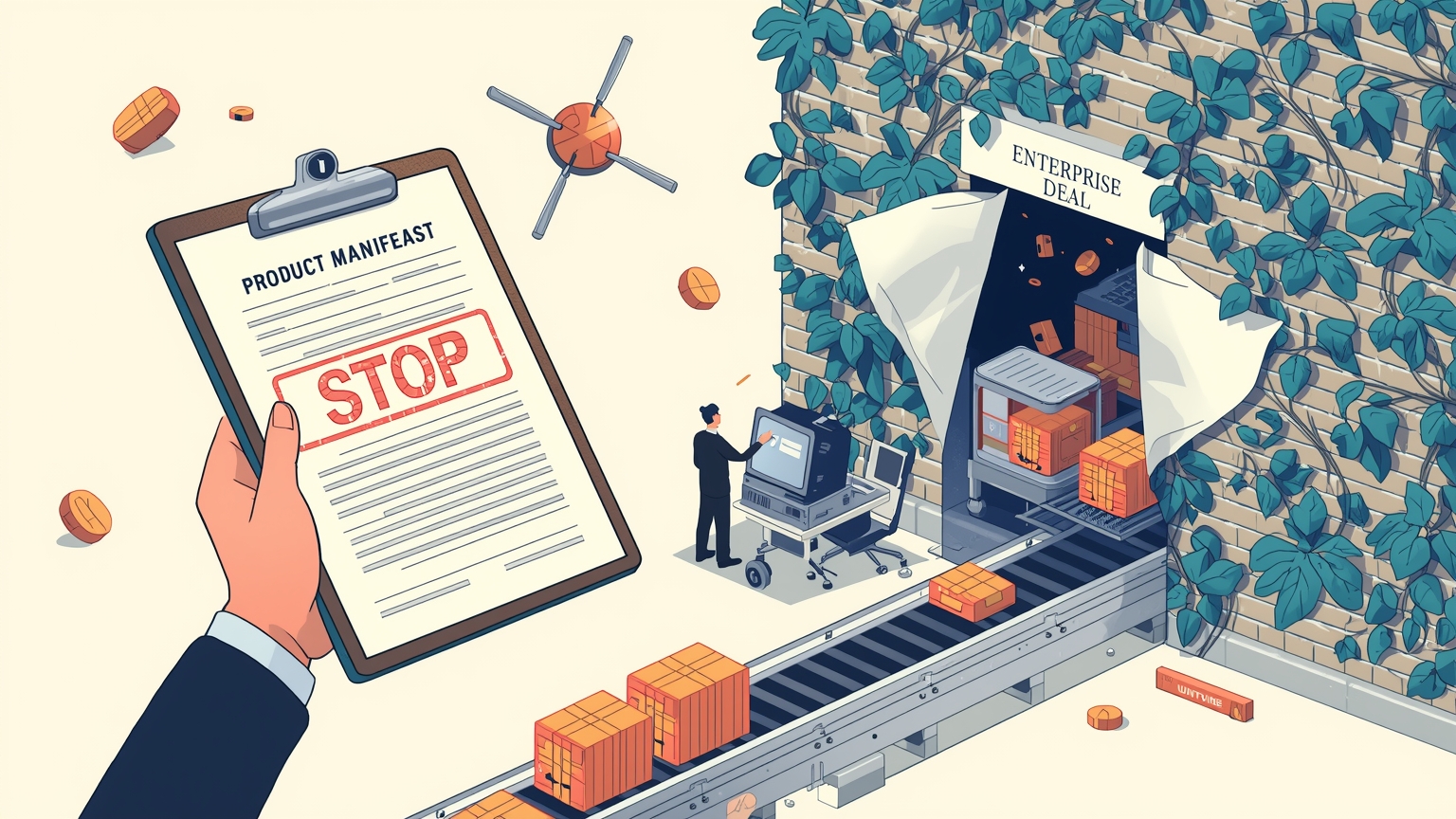
You are three weeks from a major product launch. Your enterprise prospect's security team sends over their vendor questionnaire. Question 17: "List all open-source components in your software and their license types."
Your engineering lead shrugs. "We use a lot of libraries. The developers know what's in there."
That shrug can cost you the deal.
The Risk You Don't See Until It's Too Late
Open-source dependencies accumulate silently. A developer pulls in a logging utility, which pulls in a parsing library, which pulls in something licensed under GPL-3.0. No one tracks this. No one approves it. The dependency graph grows like ivy behind the walls of your product.
Then comes the audit. Customer security review. Investor due diligence. Acquisition scrutiny. Someone runs a scanner and finds copyleft licenses buried three layers deep. Suddenly you're explaining to your CEO why a routine milestone now requires an emergency code rewrite—or why the deal is dead.
The financial impact varies, but the pattern is consistent: compliance gaps discovered late create disproportionate damage. A delayed funding round. A lost enterprise contract. A tarnished reputation with procurement teams who talk to each other.
Why This Is a Product Owner Problem, Not Just Legal's
Engineering teams understand technical debt. They do not always recognize license debt. The tools they use for dependency management—package managers, lock files, basic scanners—show you what you use, not what you owe.
Legal teams review contracts. They do not live in your repositories. They cannot spot a risky dependency before it ships. By the time they see the issue, the code is in production and the clock is running.
Product owners sit in the gap. You own the roadmap, the revenue timeline, and the customer relationships. When a license problem surfaces, you own the explanation.
What Changed: GitHub's Enterprise Compliance Push
GitHub recently made its open-source license compliance tool generally available for GitHub Enterprise Cloud. The tool lets you define ruleset-based policies that enforce license requirements automatically—flagging prohibited licenses before code merges, not after a customer asks.
This matters because it shifts compliance left. Instead of discovering a GPL dependency during due diligence, your workflow blocks it at the pull request stage. The developer gets immediate feedback. The product owner gets a paper trail.
Two supporting updates reinforce GitHub's enterprise focus. Multi-repository support in Slack and Teams integrations means compliance alerts reach the right people across organizational boundaries—not just within a single repo. And CSV export of license usage data gives you audit-ready documentation for external verification, not just internal dashboards.
What This Tool Does—and Doesn't—Do
The GitHub tool enforces policy. It does not replace legal judgment. A ruleset can block GPL-3.0 automatically, but someone still needs to decide whether LGPL with dynamic linking is acceptable for your specific use case. The tool executes your policy; it does not write it.
Coverage also matters. Transitive dependencies—libraries your libraries use—can slip through incomplete scans. The tool is only as good as the dependency graph it sees. This is a universal challenge in software composition analysis, not a GitHub-specific limitation.
Finally, this requires GitHub Enterprise Cloud. Free and Team plans do not include it. If you are on a lower tier, the question becomes whether the risk reduction justifies the upgrade, or whether an equivalent third-party tool fits better.
A Practical Framework for Product Owners
You do not need to become a license expert. You need to know enough to ask the right questions and ensure someone owns the answers.
Inventory before you need it. Run a scan of your current dependencies now, not when a customer asks. Know what you are shipping. The surprise is what hurts you.
Define your risk tolerance. Which licenses are automatic blocks? Which require legal review? Which are acceptable with conditions? Write this down. Ambiguity becomes delay when pressure is high.
Automate enforcement at the workflow level. Manual checks fail. Developers forget. Build systems change. Policy embedded in your CI/CD pipeline scales; reminders in Slack do not.
Prepare audit documentation. Customer security teams, investors, and acquirers want evidence of systematic governance, not just a current snapshot. Exportable records with timestamps show you have been managing this, not scrambling to catch up.
Assign ownership. Someone needs to maintain the policy, review exceptions, and track upstream changes. If no one owns it, no one improves it.
When to Act
The wrong time to address license compliance is during a live diligence process. You will be negotiating from weakness, with limited time and maximum visibility.
The right time is now—before your next customer security review, before your next funding round, before your next acquisition conversation. The cost of proactive governance is modest. The cost of a discovered gap at the wrong moment can be catastrophic.
GitHub's enterprise compliance tooling is one path. It is not the only path. But the direction is clear: license governance is becoming a standard expectation in B2B software procurement, and the tools to meet that expectation are maturing.
Your competitors are not necessarily ahead of you on this. Most companies are reactive. The product owner who builds systematic compliance into their operating rhythm gains a durable advantage: predictable deal velocity, cleaner due diligence, and the confidence to say yes to enterprise opportunities without hidden qualifiers.
That is worth more than the time it takes to set up.